
For decades, the medical system treated the end of cancer care as a finish line.
Surgery done. Treatment complete. Reconstruction handled. Case closed.
But anyone who has lived through it knows that is not where the story ends. It is where a different kind of recovery begins.
Physical healing is one part of the process. Emotional recovery is another. And for many survivors, the most difficult part is facing a body that no longer feels like their own. A body that carries the evidence of everything it endured. A body that medicine repaired, but did not fully restore.
That gap between what surgery can do and what healing actually requires has been largely overlooked.
That is starting to change.
A Room Full of People Who Understand
On April 11, 2026, at Hotel Valley Ho in Scottsdale, Arizona, that shift becomes visible.
The Gather and Grow conference, a serious oncology-adjacent event focused on patient-centered care and innovation, will feature a session that would not have been included on a program like this even a few years ago.
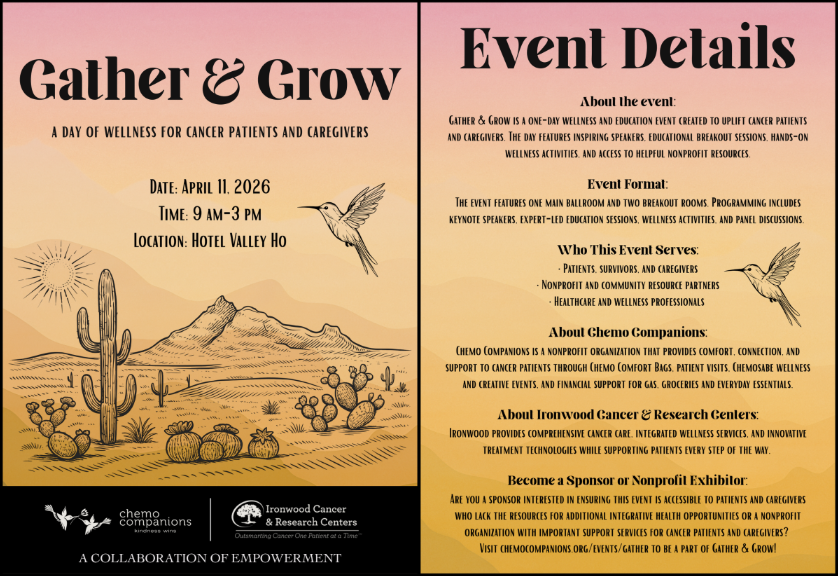
Jayd Hernandez, a nationally recognized paramedical tattoo specialist with over a decade of experience and more than 1,000 restorative procedures performed, will present:
Transformative Tattooing: Restoring Identity Through Paramedical Art
Scheduled from 12:30 to 1:00 PM, the session will explore how restorative tattooing, including hyper realistic 3D areola restoration and scar camouflage, is extending healing beyond surgery and into the part of recovery that has long been ignored.
This is not a beauty conference. This is not a tattoo convention.
This is a room full of professionals who dedicate their lives to cancer care.
And they have decided that this work belongs in the conversation.
That matters.

Why the Press Paid Attention
When the press release for this event was distributed, the response was immediate.
Within days, the story appeared across more than 500 media placements, reaching a potential audience of over 60 million people. That kind of distribution does not happen by accident. It reflects a story that resonates.


Featured in outlets including Digital Journal, CBS, FOX450, and ABC 26, the coverage spanned both regional and national level platforms, signaling that this conversation is no longer confined to niche audiences.
The reason is simple.
This story captures something people already feel but have not fully articulated.
The idea that the final stage of healing after mastectomy might happen outside the operating room. The idea that something long labeled as cosmetic is actually deeply restorative. The idea that identity, confidence, and wholeness are not secondary outcomes. They are central to recovery.
These are not radical ideas.
They are overdue ones.
What This Work Actually Does
The session itself is built around a clear distinction.
Reconstructive surgery restores structure.
Restorative tattooing restores the person.
3D areola restoration uses advanced micropigmentation, layered shading, and custom pigment blending to recreate the natural appearance of a nipple and areola on surgically altered skin. The results are realistic, dimensional, and designed to look as if they were always there.
Scar camouflage works differently, but with a similar goal. Surgical scars are permanent, but their visual impact does not have to be. Through specialized pigment techniques, scars can be softened and blended into the surrounding skin, reducing their visibility and emotional weight.
This is work that sits at the intersection of medical precision and artistic care. That is exactly why it is now entering clinical conversations.
For many patients, this is the moment that changes everything.
The moment they stop feeling like a patient.
And start feeling like themselves again.
Recognition Beyond Aesthetics
What makes this shift even more significant is that the work is no longer being viewed as purely aesthetic.
Jayd Hernandez holds a National Provider Identifier, meaning eligible patients may pursue medical reimbursement for these procedures. At the same time, reconstructive surgeons are increasingly referring patients directly to paramedical tattoo specialists as part of final stage care.
This signals something important.
The line between medical treatment and aesthetic restoration is no longer as rigid as it once was.
And the system is beginning to adapt.
A Bigger April
This moment is not happening in isolation.
In addition to her presentation at Gather and Grow, Hernandez will attend the Oncology Clinical Updates Review and Renew event in Sedona on April 11 and 12 as an Honorarium Attendee. This reflects growing credibility within oncology adjacent medical communities.
Later in the month, she will appear as a panel speaker at the Aveda Institute Phoenix, discussing the intersection of beauty, business ownership, and medically adjacent services.
Together, these appearances point to something larger.
This field is not emerging quietly.
It is being invited into the rooms that shape how recovery is defined.
What This Means for Survivors
For breast cancer survivors navigating life after mastectomy and reconstruction, this shift has real implications.
It means more doctors are becoming aware of these options.
More care teams are beginning to include them in recovery conversations.
More patients are realizing that this stage of healing is available to them.
It also means something simpler.
If you have been wondering whether this matters, whether it is worth pursuing, the answer being reflected in conference rooms, referrals, and national media coverage is clear.
It does.
What This Means for the Field
For practitioners, this moment represents opportunity and responsibility.
Demand is growing. Awareness is expanding. And the need for highly trained specialists is becoming more visible.
Hernandez has already contributed to this growth by training a new generation of paramedical tattoo artists through one of the industry’s most comprehensive programs. As this work continues to gain recognition, that kind of education becomes essential.
Because this is not just about technique.
It is about understanding the weight of what patients have been through and delivering results that meet that reality.
Three Weeks Away
April 11 is approaching.
The session will happen. The conversation will continue. And another room of professionals will walk away with a clearer understanding of what healing can look like beyond surgery.
The people who need to hear this are finally in the room.
And the people who need this work are finally being seen.