
There’s a moment after top surgery when everything is quieter.
The binder is gone. The swelling starts to settle. You stand in front of the mirror and think:
“Okay… this is me now.”
And then, almost immediately after:
“Something’s still missing.”
For some, it’s subtle. For others, it’s obvious.
No nipples. Or nipples that don’t look like you imagined. Or scars that still feel like they’re speaking louder than you are.
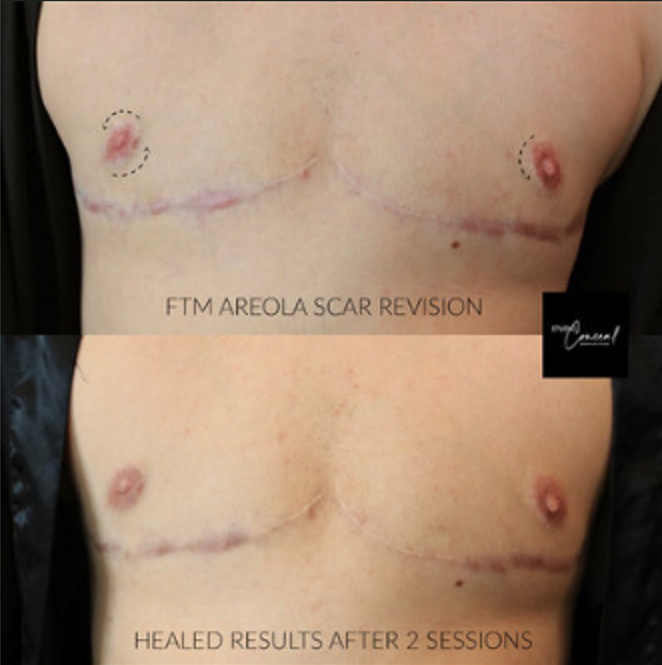
That’s where 3D nipple tattooing enters the story. Not as decoration—but as the final sentence in a paragraph you’ve been writing for a long time.
But here’s the part nobody loves hearing:
👉 You probably shouldn’t rush it.
Your Body Is Not Done, Even If You Feel Done
Top surgery feels like an ending. In reality, it’s the beginning of a long, quiet process your body goes through without asking you for permission.
Skin stretches. Contracts. Rebuilds.
Scars behave like unpredictable guests—sometimes calm, sometimes dramatic.
From the outside, things might look “healed” after a couple of months.
From the inside, your body is still busy rewriting itself.
And tattooing over a story that’s still being edited?
Not the best idea.
The Timeline (The Honest Version)
Let’s remove the Instagram version and talk about reality.
First 6 Weeks
Your body is basically saying:
“Please don’t touch anything.”
Everything is fresh. Sensitive. Still figuring out what just happened.
👉 Tattooing here would be like painting over wet cement.
2–3 Months
You feel better. You move easier. You start thinking, “Maybe I’m good now.”
You’re not.
Your skin is still changing under the surface. Quietly, but constantly.
3–6 Months
Things begin to resemble stability.
Scars soften a bit. Swelling goes down. You start recognizing your chest.
And this is where people get impatient.
👉 This is also where mistakes happen.
6–12 Months
Now we’re talking.
Your body has slowed down. The chaos has mostly settled.
What you see is closer to what you’ll actually live with.
👉 This is the window where nipple tattooing makes sense.
After 12 Months
If you waited this long, congratulations—you’ve done the hardest thing: nothing.
And in this case, doing nothing was exactly the right move.
👉 Best skin condition. Best pigment retention. Best long-term result.
So… When Is the Right Time?
Simple version:
👉 Between 6 and 12 months after top surgery.
More honest version:
👉 Closer to 9–12 months if you want it done right.
Because this isn’t just about adding color.
It’s about working with skin that’s finally ready to cooperate.
Signs Your Body Is Actually Ready
Forget the calendar for a second.
Look at your chest:
- Are your scars calm, not loud?
- Is the redness fading instead of screaming?
- Does touching the area feel normal, not sensitive?
- Does your skin look like it has stopped negotiating with reality?
If yes → you’re getting close.
If not → your body is still mid-conversation.
“But I Didn’t Get Nipple Grafts…”
Then this step matters even more.
Because now, you’re not restoring—you’re creating.
And that’s powerful.
You get:
- Full control over placement
- Control over size
- Control over how “natural” or defined it looks
But even with that freedom, one rule stays the same:
👉 Your skin sets the timeline, not your impatience.
Tattooing Over Scars: Not All Skin Is Equal
Scar tissue is… complicated.
It doesn’t behave like normal skin. It absorbs pigment differently. Sometimes it listens. Sometimes it doesn’t.
A good paramedical tattoo artist doesn’t fight that.
They adapt.
They go slower. Layer by layer. Session by session if needed.
They treat your skin like something that’s been through something—not like a blank canvas.
What This Actually Changes
This part matters.
Because people think it’s just visual.
It’s not.
It’s:
- Looking down and not second-guessing
- Feeling like the process has a full stop, not a comma
- Seeing something that feels intentional—not surgical
And sometimes, that’s the difference between “this is fine” and “this is mine.”
The Mistakes People Regret
Let’s save you time.
Going too early
Looks fine at first. Doesn’t age well. Needs fixing.
Choosing the wrong artist
This is not regular tattooing. It’s a completely different skill set.
Expecting perfection in one session
Your skin might need time to accept the pigment. That’s normal.
The Part Nobody Likes: Waiting
Waiting is frustrating.
You’ve already waited long enough—for surgery, for healing, for everything that came before.
And now you’re being told to wait again.
But this time, it’s different.
This isn’t waiting because you have no choice.
This is waiting because it gives you control over the outcome.
Final Thought
Top surgery changes your body.
Healing changes how that body behaves.
And nipple tattooing—when done at the right time—changes how you see yourself in it.
Not dramatically. Not loudly.
Just enough to feel like the story finally makes sense.